格物
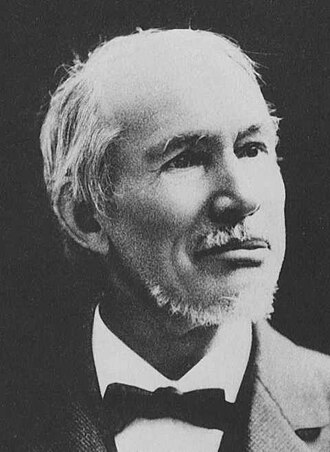
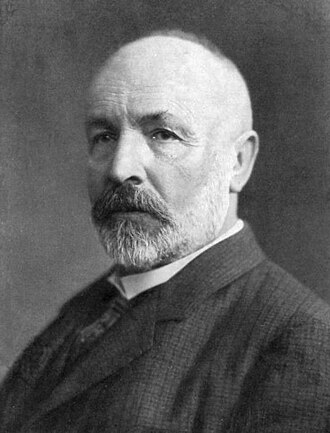
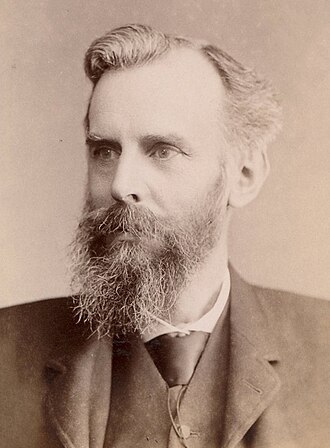
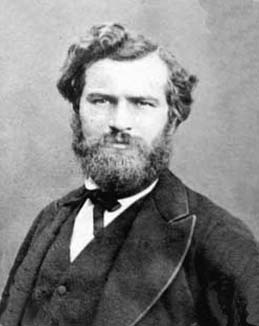
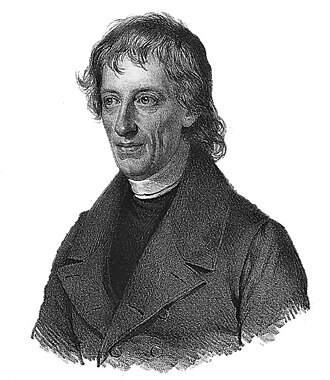
图:作者不详 · Public domain · Wikimedia Commons
乔治·威廉·希尔1838—1914
美国天文学家、数学家
英国皇家天文学会金质奖章 1887科普利奖章 1909布鲁斯奖 1909
乔治·威廉·希尔,美国天文学家、数学家。
摘自维基百科「喬治·希爾 (天文學家)」,CC BY-SA 4.0
- 出生
- 1838 年 3 月 3 日,纽约
- 逝世
- 1914 年 4 月 16 日,奈亚克
- 国籍
- 美国
- 学科
- 数学、天文学、博物与综合
- 职业
- 天文学家、数学家
- 母语 / 工作语言
- 英语
- 母校
- 罗格斯大学(1862 年)
- 工作单位
- US Nautical Almanac Office(1861—1898)、哥伦比亚大学(1898—1901)
研究领域
主要贡献
代表成就
师承
师从1
来自 Wikidata 的「博士导师」「师从」「博士生」「学生」记录,可能不全。
所获奖项(5)
- 1887英国皇家天文学会金质奖章
- 1898Damoiseau prize
- 1902英国皇家学会外籍会员
- 1909科普利奖章
- 1909布鲁斯奖
学会与院士
百科正文
生平
希尔生于美国纽约市,父亲是画家和雕刻家约翰·希尔,母亲是凯瑟琳·史密斯·希尔。在希尔8岁时他和家人搬到纽约州西奈亚克。希尔在高中毕业后于1859年进入罗格斯大学就读。1861年起他在美国马萨诸塞州剑桥的美国航海天文历编制局工作。他的工作主要是以数学描述三体问题,不久进一步延伸到四体问题以计算月球绕地球轨道和行星环绕恒星轨道。
希尔还以数学描述了希尔球,这是一个天体的重力场影响范围,也是该天体不受环绕质量较重天体重力扰动的边界。
1894年希尔担任美国数学学会会长两年。1908年他被选为爱丁堡皇家学会院士,以及比利时(1909年)、挪威(1910年)、瑞典(1913年)等国科学院院士。
希尔去世于纽约州西奈亚克。
荣誉与奖项
奖项
- 1887年英国皇家天文学会金质奖章
- 1898年法兰西学会达穆瓦索奖
- 1909年科普利奖章
- 1909年布鲁斯奖
命名事物
月球上的希尔陨石坑
小行星1642
罗格斯大学布什校区的 Hill Center for the Mathematical Sciences
以上内容摘自维基百科「喬治·希爾 (天文學家)」,按 CC BY-SA 4.0 使用,去掉了参考文献、外部链接等尾部小节,公式改写成了纯文本。全文、配图和出处见原文。
英文维基百科补充中文条目比较短,下面是英文条目「George William Hill」的原文
George William Hill (March 3, 1838 – April 16, 1914) was an American astronomer and mathematician. Working independently and largely in isolation from the wider scientific community, he made major contributions to celestial mechanics and to the theory of ordinary differential equations. The importance of his work was explicitly acknowledged by Henri Poincaré in 1905. In 1909 Hill was awarded the Royal Society's Copley Medal, "on the ground of his researches in mathematical astronomy". Hill is remembered for the Hill differential equation, along with the Hill sphere.
Early life and education
Hill was born in New York City to painter and engraver John William Hill and his wife, Catherine Smith. He moved to West Nyack with his family when he was eight years old. After high school, Hill attended Rutgers College, where he became interested in mathematics.
At Rutgers, Hill came under the influence of professor Theodore Strong, who was a friend of pioneering US mathematician and astronomer Nathaniel Bowditch. Strong encouraged Hill to read the great works on analysis by Sylvestre Lacroix and Adrien-Marie Legendre, as well as the treatises on mechanics and mathematical astronomy by Joseph-Louis Lagrange, Pierre-Simon Laplace, Siméon Denis Poisson, and Gustave de Pontécoulant.
Hill graduated from Rutgers College in 1859, with a Bachelor of Arts degree. In that same year he published his first scientific paper, on the geometrical curve of a drawbridge. Two years later he earned a prize from the Runkle Mathematical Monthly for his work on the mathematical theory of the figure of the Earth.
In the early 1860s, Hill began studying the works on lunar theory by Charles-Eugène Delaunay and Peter Andreas Hansen, which would inspire and motivate most of Hill's subsequent research.
Work on mathematical astronomy
Hill's mature work focused on the mathematics of the three-body problem, and later the four-body problem, to calculate the orbits of the Moon around the Earth, as well as that of planets around the Sun. Hill was able to quantify the gravitational sphere of influence of an astronomical body in the presence of other heavy bodies, by introducing the concept of the zero-velocity surface. The space within this surface is called the Hill sphere, which corresponds to the region around a body within which it may capture satellites.
In 1878, Hill provided the first complete mathematical solution to the problem of the apsidal precession of the Moon's orbit around the Earth, a difficult problem in lunar theory first raised in Isaac Newton's Principia Mathematica of 1687. This same work also introduced what became known in physics and mathematics as the "Hill differential equation", which describes the behavior of a parametric oscillator and which made an important contribution to the mathematical Floquet theory.
Influence and recognition
Hill's work attracted the attention of the international scientific community, and in 1894 he was chosen as president of the American Mathematical Society, serving for two years. Hill lectured at Columbia University from 1898 to 1901, but he attracted few students and he ultimately chose to return his salary and to continue working alone in his home in West Nyack, rather than within academia.
Hill's Collected Works were published in 1905-07 by the Carnegie Institution for Science, with a 12-page introduction by the eminent French mathematician and theoretical physicist Henri Poincaré. In that introduction, Poincaré said that, in Hill's 1878 article titled "Researches in the lunar theory", "one is allowed to perceive the germ of most of the progress that [celestial mechanics] has made ever since". Of Hill's isolation from the academic community, Poincaré declared that
This reserve, I was going to say this savagery, has been a happy circumstance for science, because it has allowed him to complete his ingenious and patient researches.
George William Hill was elected as a foreign member of the Royal Society of London in 1902.
Honors
- Elected member of the American Academy of Arts and Sciences (1865)
- Elected member of the United States National Academy of Sciences (1874)
- Gold Medal of the Royal Astronomical Society (1887)
- Damoiseau Prize from the Institut de France (1898)
- Elected member of the American Philosophical Society (1903)
- Copley Medal of the Royal Society of London (1909)
- Bruce Medal of the Astronomical Society of the Pacific (1909)
- Hill crater on the Moon
- Asteroid 1642 Hill
- Hill Center for the Mathematical Sciences at Rutgers University's Busch Campus
以上节选摘自英文维基百科「George William Hill」,按 CC BY-SA 4.0 使用,去掉了参考文献、外部链接等尾部小节,公式改写成了纯文本。篇幅所限,较长的小节只摘了开头一部分,有的小节没有收;全文、配图和出处见原文。
同一学科、同时代的科学家