格物
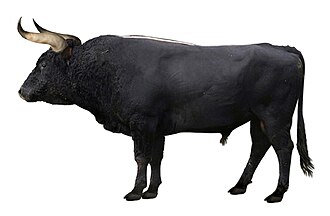
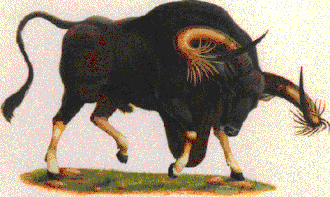
图:Jaap Rouwenhorst (photograph) DFoidl (GIMP modifications) · CC BY-SA 3.0 · Wikimedia Commons
生命之树 › 真核生物 › 动物界 › 真后生动物亚界 › 两侧对称动物 › 后口动物总门 › 脊索动物门 › 脊椎动物亚门 › 有颌下门 › 肉鳍鱼总纲 › 四足形类 › 希望螈目 › 四足总纲 › 哺乳动物 › 兽型类 › 全兽类 › 兽亚纲 › 有胎盘类 › 北方真兽高目 › 劳亚兽总目 › 偶蹄目 › 牛科 › 牛亚科 › 牛属
原牛种
Bos primigenius
原牛,是一种已灭绝的牛亚种,是现代家牛未驯化的野生近亲。最后一只于1627年在波兰灭绝。原牛出现在欧洲和西亚的石器时代的洞穴壁画中,显示它是重要的猎物。其英文名 Aurochs 和 Urus 起源于日耳曼语,意谓原始牛。
摘自维基百科「原牛」,CC BY-SA 4.0
- 学名
- Bos primigenius
- 分类等级
- 种
- 英文名
- aurochs
- 上级类群
- 牛属
- 大类
- 哺乳动物
- 命名
- 路德维希·海因里希·伯亚努斯,1827 年
- 保护状况(IUCN)
- 绝灭
- 体重
- 1500 千克
- 身高 / 株高
- 1.9 米
- 数据库
- NCBI 分类 · GBIF · IUCN 红色名录
百科正文
驯养及绝种
约公元前6000年,高加索南部及美索不达米亚北部开始驯养原牛,遗传证据显示北非及印度亦有另行驯化原牛,此一过程令原牛大为改变,甚至与现今的家牛变成另一亚种。
不过,今日欧洲的牛只是否起源自原牛的驯化过程,尚成疑问。虽然原牛早于铜器时代已从英国绝种,但遗传研究却发现当时的原牛与今日的牛种并无明显关连,有说认为欧洲家牛是直接由近东一带的原牛产生的后代。
最后一只原牛活动在波兰西部森林中,于1627年死于自然因素,最后一只原牛的死亡宣告了这一物种野生种群的灭绝。
以上内容摘自维基百科「原牛」,按 CC BY-SA 4.0 使用,去掉了参考文献、外部链接等尾部小节,公式改写成了纯文本。全文、配图和出处见原文。
英文维基百科补充中文条目比较短,下面是英文条目「Aurochs」的原文
The aurochs (Bos primigenius; or; pl.: aurochs or aurochsen; also ure or urus) is an extinct species of bovine, considered to be the wild ancestor of modern domestic cattle (Bos taurus). With a shoulder height of up to 1.8 m (5 ft 11 in) in bulls and 1.55 m (5 ft 1 in) in cows, it was one of the largest herbivores in the Holocene; it had massive elongated and broad horns that reached 80 cm (31 in) in length.
The aurochs was part of the Pleistocene megafauna and had an expansive range spanning from western Europe and northern Africa to the Indian subcontinent and East Asia. It probably evolved in Asia and migrated west and north during warm interglacial periods. The oldest-known aurochs fossils date to the Middle Pleistocene. Its distribution progressively contracted during the Holocene due to habitat loss and hunting. The last confirmed and widely accepted individual died in Jaktorów forest in Poland in 1627, though some reports suggest it may have survived up to a century later in parts of southeastern Europe.
There is a long history of interaction between aurochs and humans, including archaic hominins like Neanderthals. The aurochs is depicted in Paleolithic cave paintings, Neolithic petroglyphs, Ancient Egyptian reliefs and Bronze Age figurines. It symbolised power, sexual potency and prowess in religions of the ancient Near East. Its horns were used in votive offerings, as trophies and drinking horns.
Two aurochs domestication events occurred during the Neolithic Revolution. One gave rise to the domestic taurine cattle in the Fertile Crescent that was introduced to Europe via the Balkans and the coast of the Mediterranean Sea. Hybridisation between aurochs and early domestic cattle occurred during the early Holocene. Domestication of the Indian aurochs led to the zebu cattle (Bos indicus) that hybridised with early taurine cattle in the Near East about 4,000 years ago. Some modern cattle breeds exhibit features reminiscent of the aurochs, such as the dark colour and light eel stripe along the back of bulls, the lighter colour of cows, or an aurochs-like horn shape.
以上节选摘自英文维基百科「Aurochs」,按 CC BY-SA 4.0 使用,去掉了参考文献、外部链接等尾部小节,公式改写成了纯文本。篇幅所限,较长的小节只摘了开头一部分,有的小节没有收;全文、配图和出处见原文。