格物
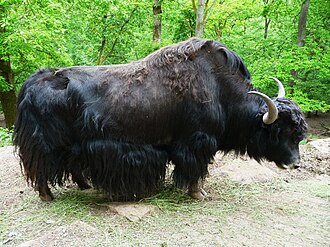
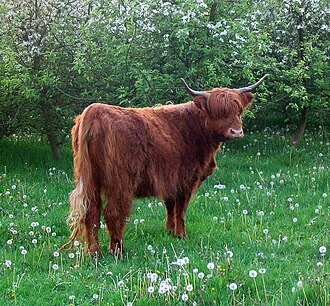
图:4028mdk09 · CC BY-SA 3.0 · Wikimedia Commons
- 学名
- Bos
- 分类等级
- 属
- 上级类群
- 牛亚科
- 大类
- 哺乳动物
- 命名
- 卡尔·林奈,1758 年
- 数据库
- NCBI 分类 · GBIF
下级类群(9)



百科正文
分布
牛属中家牛是世界上数目最多的哺乳动物之一,大约有13亿。该属的成员目前在非洲、亚洲、欧洲、北美、南美部分地区和大洋洲均有分布。它们的栖息地在很大程度上随物种不同而异。可以在大草原、稀树草原、湿地、热带雨林和温带森林等生存。
生态和行为
牛属物种在野外一般有18-25年的寿命,圈养时最高可达36年。有一个9-11个月的妊娠期,根据品种生育一头小牛,很少有两个。
大多数种类的牛群成员数从10到几百不等。牛群中一般只有一头公牛。主导权在牛群很重要,而小牛通常会继承母亲在牛群中的地位。
一般在昼夜活动,在一天中较热时间段内休息,上午和下午较活跃。在已被人类侵占的地区也可能会变成昼伏夜出。有些种类也迁徙,以寻找食物和水的供应。
分类
牛属包含5个现存物种,其中有些受驯养的种群,过去曾因其品种之间的变异程度而一度被归类为不同的物种,现多归类为亚种。
- †尖额牛 B. acutifrons
- 印度野牛 B. gaurus
- 大额牛 B. g. frontalis
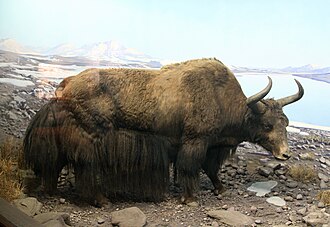
- 牦牛 B. grunniens
- 爪哇野牛 B. javanicus
- †平额牛 B. planifrons
- 林牛(柬埔寨野牛)B. sauveli
- 黄牛 B. taurus
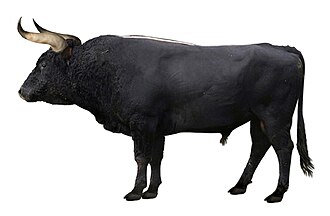
- †原牛 B. t. primigenius
- 普通牛 B. t. taurus
- 瘤牛 B. t. indicus
以上内容摘自维基百科「牛属」,按 CC BY-SA 4.0 使用,去掉了参考文献、外部链接等尾部小节,公式改写成了纯文本。全文、配图和出处见原文。
英文维基百科补充中文条目比较短,下面是英文条目「Bos」的原文
Bos (from Latin bōs: cow, ox, bull) is a genus of bovines, which includes, among others, wild and domestic cattle.
Bos is often divided into four subgenera: Bos, Bibos, Novibos, and Poephagus, but including these last three divisions within the genus Bos without including Bison is believed to be paraphyletic by many workers on the classification of the genus since the 1980s. The genus as traditionally defined has five extant species, but this rises to eight when the domesticated varieties are counted as separate species, and ten when the closely related Bison is also included. Most but not all modern breeds of domesticated cattle (including taurine cattle and zebu) are believed to have originated from the extinct aurochs. Others like Bali cattle and gayal are thought to have originated from South and Southeast Asian Bos species.
Description
The species are grazers, with large teeth to break up the plant material they ingest. They are ruminants, having a four-chambered stomach that allows them to break down plant material.
Distribution
There are about 1.3 billion domestic cattle alive today, making them one of the world's most numerous mammals. Members of this genus are currently found in Africa, Asia, Europe, parts of North America, South America and also in Oceania. Their habitats vary greatly depending on the particular species; they can be found in prairies, rain forests, wetlands, savannah and temperate forests.
Ecology
Most Bos species have a lifespan of 18–25 years in the wild, with up to 36 being recorded in captivity. They have a 9–11 month gestation, depending on the species and birth one or, rarely, two young in the spring.
Most species travel in small herds ranging in size from ten to thirty members. Within most herds, there is one bull (male) for all the cows (female). Dominance is important in the herds; calves will usually inherit their mother's position in the hierarchy.
They are generally diurnal, resting in the hot part of the day and being active morning and afternoon. In areas where humans have encroached on the territory of a herd, they may turn nocturnal. Some species are also migratory, moving with food and water availability.
Taxonomy
In 2003, the International Commission on Zoological Nomenclature resolved a long-standing dispute about the naming of those species (or pairs of species) of Bos that contain both wild and domesticated forms. The commission "conserved the usage of 17 specific names based on wild species, which are predated by or contemporary with those based on domestic forms", confirming Bos primigenius for the aurochs and Bos gaurus for the gaur. If domesticated cattle and gayal are considered separate species, they are to be named Bos taurus and Bos frontalis; however, if they are considered part of the same species as their wild relatives, the common species are to be named Bos primigenius and Bos gaurus.
During the 2010s, analysis of the complex genetics of the bovine lineages determined that the genus Bison needed to be relegated to a subgenus of Bos in order to retain monophyly within Bos since both extant species of Bison are phylogenetically embedded within Bos. The specific relationships in these analyses determined that the two living bison species were each other's closest living relatives, with their closest relatives amongst Bos being the yaks based on nuclear DNA. The mitochondrial DNA for the wisent was found to contradict the nuclear DNA result, and was more closely related to those of cattle, while the mitochondrial DNA of the American bison supported the nuclear DNA result of a close relationship with yaks. The discrepancy between the mitochondrial DNA of the American bison and wisent is suggested to be likely due to incomplete lineage sorting or genetic introgression into B. bonasus from other Bos species.
Relationships of members of the genus Bos based on nuclear genomes after Sinding, et al. 2021.
Species
- The following species are known:
- Subgenus Bos Linnaeus, 1758
- Bos taurus (domestic cattle)
- B. t. taurus (Taurine cattle)
- B. t. africanus (Sanga cattle)
- Bos indicus (zebu or indicine cattle)
- †Bos primigenius (aurochs)
- †B. p. primigenius (Eurasian aurochs)
- †B. p. mauritanicus (North African aurochs)
- †B. p. namadicus (Indian aurochs)
- †Bos acutifrons
- †Bos buiaensis
- Subgenus Bibos Hodgson, 1837
- Bos gaurus (gaur or Indian bison)
- Bos frontalis (gayal)
- Bos javanicus (banteng)
- B. j. domesticus (Bali cattle)
- †Bos palaesondaicus
- †Bos sauveli (kouprey) (likely extinct, last seen 1969)
- Subgenus Poephagus Gray, 1843
- Bos mutus (wild yak)
以上节选摘自英文维基百科「Bos」,按 CC BY-SA 4.0 使用,去掉了参考文献、外部链接等尾部小节,公式改写成了纯文本。篇幅所限,较长的小节只摘了开头一部分,有的小节没有收;全文、配图和出处见原文。