格物
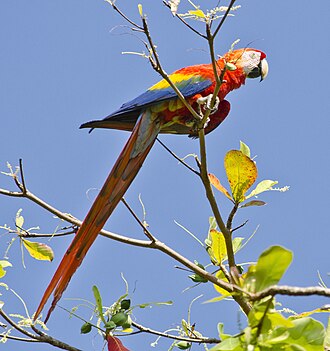
图:chuck624 from Upstate NY, USA · CC BY-SA 2.0 · Wikimedia Commons
生命之树 › 真核生物 › 动物界 › 真后生动物亚界 › 两侧对称动物 › 后口动物总门 › 脊索动物门 › 脊椎动物亚门 › 有颌下门 › 肉鳍鱼总纲 › 四足形类 › 希望螈目 › 四足总纲 › 爬行动物 › 坚尾龙类 › 鸟纲 › 今鸟亚纲 › 今颚下纲 › 新鸟总目 › 鹦形目 › 鹦鹉总科 › 金刚鹦鹉科 › 金刚鹦鹉亚科 › 金刚鹦鹉属
绯红金刚鹦鹉种
Ara macao
绯红金刚鹦鹉,又名五彩金刚鹦鹉,属于鹦鹉科中的金刚鹦鹉属。分布范围包括墨西哥南部地区到巴拿马及南美洲南部的热带森林到玻利维亚东部。是金刚鹦鹉中分布范围最广的一种。
摘自维基百科「緋紅金剛鸚鵡」,CC BY-SA 4.0
- 学名
- Ara macao
- 分类等级
- 种
- 英文名
- scarlet macaw
- 上级类群
- 金刚鹦鹉属
- 大类
- 鸟类
- 命名
- 卡尔·林奈,1758 年
- 保护状况(IUCN)
- 无危物种
- 主要食物
- 水果、坚果、种子、花、花蜜
- 数据库
- NCBI 分类 · GBIF · IUCN 红色名录
百科正文
体长约85厘米,体重1000克。寿命约50年。绯红金刚鹦鹉从额到枕部、颈、背部和尾巴的羽毛都是绯红色。只有翅膀上覆盖着黄色羽毛,以及深蓝色的初、次级飞羽。喙的上部为肉色,下部铅灰色,趾铅蓝色。绯红金刚鹦鹉与绿翅金刚鹦鹉非常相似,最大的不同之处在于:绿翅金刚鹦鹉翅膀上红色与蓝色交界处是绿色,而绯红则为黄色。
受到鸟类贸易的影响,绯红金刚鹦鹉已列入华盛顿公约一级濒危绝种名单。
习性及保育
绯红金刚鹦鹉在野外时喜欢跟蓝黄金刚鹦鹉及绿翅金刚鹦鹉作伴,性格活泼,较为吵闹及喜欢沐浴,需要较大的空间飞翔。喙的力量强大,需要关在金属笼子中。语言学习能力并不强。主要食物为果仁,种子。
绯红金刚鹦鹉3岁便可以繁殖,繁殖季节从每年的11月开始到来年5月结束。一窝产卵1到2颗,孵化期约28天,幼鸟重量只有20多克,但满月时便可达560克。
以上内容摘自维基百科「緋紅金剛鸚鵡」,按 CC BY-SA 4.0 使用,去掉了参考文献、外部链接等尾部小节,公式改写成了纯文本。全文、配图和出处见原文。
英文维基百科补充中文条目比较短,下面是英文条目「Scarlet macaw」的原文
The scarlet macaw (Ara macao) also called the red-and-yellow macaw, red-and-blue macaw or red-breasted macaw, is a large yellow, green, red and blue Neotropical parrot native to humid evergreen forests of the Americas. Its range extends from southeastern Mexico to Peru, Ecuador, Colombia, Bolivia, Venezuela, Honduras, and Brazil in lowlands of 500 m (1,600 ft) (at least formerly) up to 1,000 m (3,300 ft), the Caribbean island of Trinidad, as well as the Pacific island of Coiba. Formerly, the northern extent of its range included southern Tamaulipas. In some areas, it has suffered local extinction because of habitat destruction, or capture for the parrot trade, but in other areas, it remains fairly common. It is the national bird of Honduras. Like its relative the blue-and-yellow macaw, the scarlet macaw is a popular bird in aviculture as a result of its striking plumage. It is the third most common macaw species in captivity after the blue-and-yellow and red-and-green macaw respectively. In recent years it has become much rarer in captivity and much more expensive due to stricter laws, its price being higher than even red-and-green macaws.
Taxonomy
The scarlet macaw was formally described by the Swedish naturalist Carl Linnaeus in 1758 in the tenth edition of his Systema Naturae under the binomial name Psittacus macao. The scarlet macaw is now placed in the genus Ara (Lacépède, 1799), one of six genera of Central and South American macaws.
The two subspecies can be recognized by size and color detail in the feathers on the wings:
Ara macao macao (Linnaeus, 1758): South American scarlet macaw, the nominate subspecies.
Description
It is about 84 centimeters (33 in) long, of which more than half is the pointed, graduated tail typical of all macaws, though the scarlet macaw has a larger percentage of tail than the other large macaws. The average weight is about 1 kilogram (2 lb 3 oz).
Behavior
A typical sighting is of a single bird or a pair flying above the forest canopy, though in some areas flocks can be seen. Field observations in Costa Rica found that scarlet macaws spend nearly all their time high in the forest canopy, usually more than 10 m above the ground, and are rarely seen near or on the ground, likely to reduce predation risk and because most of their food sources occur in the canopy. They often gather at clay licks.
Distribution and habitat
The scarlet macaw inhabits primarily humid, lowland subtropical rain forests, open woodlands, river edges, and savannas. In some regions, they are known to periodically visit natural mineral deposits (or 'licks'), typically in areas rich in clay and sediment, which the macaws will eat for digestive purposes and to glean vital nutrients, including sodium and calcium.
Conservation status
The habitat of scarlet macaws is also considered to have the greatest latitudinal range for any bird in the genus Ara, as the estimated maximum territorial range covers 6,700,000 km2 (2,600,000 sq mi). Nevertheless, the scarlet macaw's habitat is fragmented, and the bird is mostly confined to tiny populations scattered throughout its original range in Middle America. However, as they still occur in large numbers over most of their original range in South America, the species is classified by IUCN as least concern.
Aviculture
The scarlet macaw is an early example of a parrot breeding in captivity. Captive breeding occurred in Northern Mexico at Paquime (also called Casas Grandes) and very likely Southwest New Mexico Mimbres Valley in the 11th century. Breeding pens, perches, bones, and eggshell fragments have been uncovered. The straightforward nature of scarlet macaw breeding and the value of their plumes in trade created a market for trade wherein the animals were used in religious rites north to the Colorado Plateau region.
Predation
Young may be taken in the nest by arboreal predators such as snakes, monkeys and other small carnivores. Adults and fledglings may also be taken by large cats, such as jaguars, and by eagles and hawks.
以上节选摘自英文维基百科「Scarlet macaw」,按 CC BY-SA 4.0 使用,去掉了参考文献、外部链接等尾部小节,公式改写成了纯文本。篇幅所限,较长的小节只摘了开头一部分,有的小节没有收;全文、配图和出处见原文。