格物

图:Geek3 · CC BY-SA 4.0 · Wikimedia Commons
瑞利-金斯定律
Rayleigh–Jeans law
physical law about blackbody radiation, derived from classical physics, accurate at low frequences but requiring quantum corrections at high frequencies
瑞利-金斯定律,是物理学用来描述光谱热辐射(通常称为黑体辐射)的定律。此方法由物理学家瑞利于1900年提出,适用于低频区域的近似解。
摘自维基百科「瑞利-金斯定律」,CC BY-SA 4.0
- 类型
- 物理定律
- 命名来源
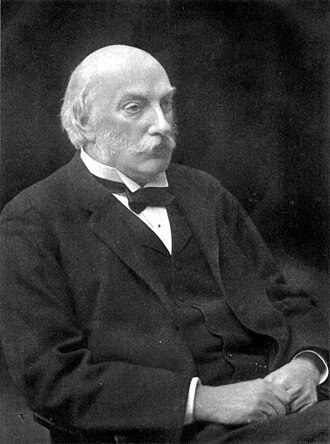
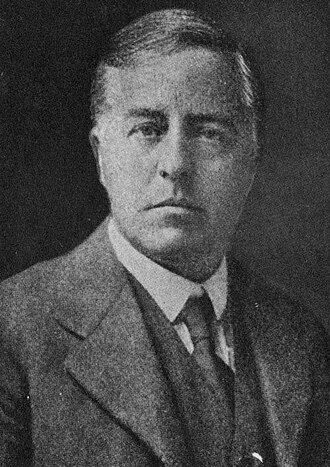
- 约翰·斯特拉特,第三代瑞利男爵、詹姆斯·琼斯
- 属于
- 热力学
- 学科
- 物理学
相关科学家
百科正文
定律
瑞利-金斯定律提出黑体发出的辐射中,黑体温度与辐射波长的关系为: (公式略)
其中 I(λ,T) 是每单位立体角、每单位波长的辐射强度,单位为 W m-3 sr-1。 λ 是辐射波长,单位为 m。 T 是黑体的温度,单位为 K。 c 是真空中的光速。 k 是玻尔兹曼常数。
此公式的另一个形式是以辐射的频率表示: (公式略)
其中 I(ν,T) 是每单位立体角、每单位频率的辐射强度,单位为 W m-2 sr-1 Hz-1。 ν 是辐射频率,单位为 Hz。 T 是黑体的温度,单位为 K。 c 是真空中的光速。 k 是玻尔兹曼常数。
与普朗克黑体辐射定律的关系
瑞利-金斯定律在波长较长时与实验相符。但是,在波长较短时,辐射强度趋向于无穷大,这于实验数据相违背。1911年,奥地利物理学家埃伦费斯特用“紫外灾变”来形容经典理论的困境。1900年,马克斯·普朗克提出的普朗克黑体辐射定律,则在全部波长的范围皆有效。普朗克黑体辐射定律形式如下: (公式略)
当 (公式略),则有 e^((hν)/kT)≈ 1+(hν)/kT
所以 (公式略)
普朗克黑体辐射定律就能退化为瑞利-金斯定律。
以上内容摘自维基百科「瑞利-金斯定律」,按 CC BY-SA 4.0 使用,去掉了参考文献、外部链接等尾部小节,公式改写成了纯文本。全文、配图和出处见原文。
英文维基百科补充中文条目比较短,下面是英文条目「Rayleigh–Jeans law」的原文
In physics, the Rayleigh–Jeans law is an approximation to the spectral radiance of electromagnetic radiation as a function of wavelength from a black body at a given temperature through classical arguments. For wavelength λ, it is (公式略)
where B_(λ) is the spectral radiance (the power emitted per unit emitting area, per steradian, per unit wavelength), c is the speed of light, k_(B) is the Boltzmann constant, and T is the temperature in kelvins. For frequency ν, the expression is instead (公式略)
The Rayleigh–Jeans law agrees with experimental results at large wavelengths (low frequencies) but strongly disagrees at short wavelengths (high frequencies). This inconsistency between observations and the predictions of classical physics is commonly known as the ultraviolet catastrophe. Planck's law, which gives the correct radiation at all frequencies, has the Rayleigh–Jeans law as its low-frequency limit.
Historical development
In 1900, the British physicist Lord Rayleigh derived the λ−4 dependence of the Rayleigh–Jeans law based on classical physical arguments, relying upon the equipartition theorem. This law predicted an energy output that diverges towards infinity as wavelength approaches zero (as frequency tends to infinity). Measurements of the spectral emission of actual black bodies revealed that the emission agreed with Rayleigh's calculation at low frequencies but diverged at high frequencies, reaching a maximum and then falling with frequency, so the total energy emitted is finite. Rayleigh recognized the unphysical behavior of his formula at high frequencies and introduced an ad hoc cutoff to correct it, but experimentalists found that his cutoff did not agree with data. Hendrik Lorentz also presented a derivation of the wavelength dependence in 1903.
Comparison to Planck's law
In 1900 Max Planck empirically obtained an expression for black-body radiation expressed in terms of wavelength λ = c/ν (Planck's law): (公式略)
where h is the Planck constant, and kB is the Boltzmann constant. Planck's law does not suffer from an ultraviolet catastrophe and agrees well with the experimental data, but its full significance (which ultimately led to quantum theory) was only appreciated several years later. Since (公式略)
then in the limit of high temperatures or long wavelengths, the term in the exponential becomes small, and the exponential is well approximated with the Taylor polynomial's first-order term: (公式略)
(公式略)
This results in Planck's blackbody formula reducing to (公式略)
which is identical to the classically derived Rayleigh–Jeans expression.
The same argument can be applied to the blackbody radiation expressed in terms of frequency ν = c/λ. In the limit of small frequencies, that is (公式略), (公式略)
Consistency of frequency- and wavelength-dependent expressions
When comparing the frequency- and wavelength-dependent expressions of the Rayleigh–Jeans law, it is important to remember that dP/(dλ)=B_(λ)(T)
and dP/(dν)=B_(ν)(T).
Note that these two expressions then have different units, as a step dλ in wavelength is not equivalent to a step dν in frequency. Therefore, B_(λ)(T)≠ B_(ν)(T),
even after substituting the value λ =c/ν, because B_(λ)(T) has units of energy emitted per unit time per unit area of emitting surface, per unit solid angle, per unit wavelength, whereas B_(ν)(T) has units of energy emitted per unit time per unit area of emitting surface, per unit solid angle, per unit frequency. To be consistent, we must use the equality B_(λ) dλ =dP=B_(ν) dν,
where both sides now have units of power (energy emitted per unit time) per unit area of emitting surface, per unit solid angle.
Starting with the Rayleigh–Jeans law in terms of wavelength, we get B_(λ)(T)=B_(ν)(T)(dν)/(dλ),
where (公式略)
Other forms of Rayleigh–Jeans law
Depending on the application, the Planck function can be expressed in 3 different forms. The first involves energy emitted per unit time per unit area of emitting surface, per unit solid angle, per spectral unit. In this form, the Planck function and associated Rayleigh–Jeans limits are given by (公式略)
(公式略)
Alternatively, Planck's law can be written as an expression I(ν,T)=π B_(ν)(T) for emitted power integrated over all solid angles. In this form, the Planck function and associated Rayleigh–Jeans limits are given by (公式略)
(公式略)
In other cases, Planck's law is written as u(ν,T)=(4π)/cB_(ν)(T)
for energy per unit volume (energy density). In this form, the Planck function and associated Rayleigh–Jeans limits are given by (公式略)
(公式略)
以上节选摘自英文维基百科「Rayleigh–Jeans law」,按 CC BY-SA 4.0 使用,去掉了参考文献、外部链接等尾部小节,公式改写成了纯文本。篇幅所限,较长的小节只摘了开头一部分,有的小节没有收;全文、配图和出处见原文。