格物
- 类型
- 定律
- 命名来源
- 卡尔·弗里德里希·高斯
- 学科
- 物理学
相关科学家
百科正文
高斯重力定律在形式上与静电学的高斯定律相同(也是麦克斯韦方程组中的一个方程)。事实上,它们都是三维空间中力场与距离平方反比(库仑定律)的结果。
定律的定性描述
定义引力场 g 为空间中每一点及每一时刻该处的假想放置的粒子受到的引力除以粒子质量。显然 g 是个向量场。
引力通量是引力场通过一个曲面的面积分。在高斯重力定律中,要求此曲面必须是可定向闭曲面。
高斯重力定律断言:
通过一个可定向闭曲面的引力通量正比于其中包含的质量
积分形式
- 高斯重力定律的积分形式断言: (公式略)
- ∂ ∂ V
- g· d s =-4π GM
- 其中 (公式略)
∂ ∂ V 表示沿闭曲面的积分。为了简明起见,也使用 ∮ _(∂ V) 来表示 (如下面的积分操作)
∂V 是任意闭曲面 (即是闭体区域 V 的边界), ds 是一个 向量,其大小是曲面 ∂V 的面积微元,方向与指向外的曲面法向量相同。 g 是 引力场,
G 是 万有引力常数,
M 是包含在曲面 ∂V 内的总质量。
等式的左边称为引力通量,它总是个负数或零,而在电磁学中相应的通量则未必。因为质量总是正的,不像电荷有正有负。
微分形式
高斯重力定律的微分形式为: ∇ · g =-4π Gρ
其中 ∇ · g 表示 散度, G 是 万有引力常数, ρ 是每一点的密度。
以上内容摘自维基百科「高斯重力定律」,按 CC BY-SA 4.0 使用,去掉了参考文献、外部链接等尾部小节,公式改写成了纯文本。全文、配图和出处见原文。
英文维基百科补充中文条目比较短,下面是英文条目「Gauss's law for gravity」的原文
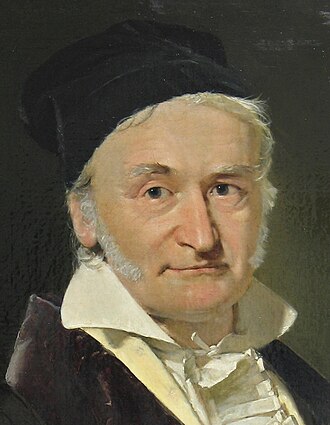
In physics, Gauss's law for gravity, also known as Gauss's flux theorem for gravity, is a law of physics that is equivalent to Newton's law of universal gravitation. It is named after Carl Friedrich Gauss. It states that the flux (surface integral) of the gravitational field over any closed surface is proportional to the mass enclosed. Gauss's law for gravity is often more convenient to work from than Newton's law.
The form of Gauss's law for gravity is mathematically similar to Gauss's law for electrostatics, one of Maxwell's equations. Gauss's law for gravity has the same mathematical relation to Newton's law that Gauss's law for electrostatics bears to Coulomb's law. This is because both Newton's law and Coulomb's law describe inverse-square interaction in a 3-dimensional space.
Qualitative statement of the law
The gravitational field g (also called gravitational acceleration) is a vector field – a vector at each point of space (and time). It is defined so that the gravitational force experienced by a particle is equal to the mass of the particle multiplied by the gravitational field at that point.
Gravitational flux is a surface integral of the gravitational field over a closed surface, analogous to how magnetic flux is a surface integral of the magnetic field.
Gauss's law for gravity states:
The gravitational flux through any closed surface is proportional to the enclosed mass.
Integral form
- The integral form of Gauss's law for gravity states:
- where ∂ V (also written ∮ _(∂ V)) denotes a surface integral over a closed surface,
- ∂V is any closed surface (the boundary of an arbitrary volume V),
dA is a vector, whose magnitude is the area of an infinitesimal piece of the surface ∂V, and whose direction is the outward-pointing surface normal (see surface integral for more details),
g is the gravitational field,
G is the universal gravitational constant, and
M is the total mass enclosed within the surface ∂V.
Differential form
The differential form of Gauss's law for gravity states
where ∇ · denotes the divergence, g is the gravitational field, G is the universal gravitational constant, and ρ is the mass density at each point.
Relation to the integral form
The two forms of Gauss's law for gravity are mathematically equivalent. The divergence theorem states: ∮ _(∂ V)g · dA =∫ _(V)∇ · g dV
where V is a closed region bounded by a simple closed oriented surface ∂V and dV is an infinitesimal piece of the volume V (see volume integral for more details).
Relation to Newton's law
Deriving Gauss's law from Newton's law
Gauss's law for gravity can be derived from Newton's law of universal gravitation, which states that the gravitational field due to a point mass is: (公式略)
where
er is the radial unit vector,
r is the radius, |r|.
M is the mass of the particle, which is assumed to be a point mass located at the origin.
A proof using vector calculus is shown in the box below. It is mathematically identical to the proof of Gauss's law (in electrostatics) starting from Coulomb's law.
Poisson's equation and gravitational potential
Since the gravitational field has zero curl (equivalently, gravity is a conservative force) as mentioned above, it can be written as the gradient of a scalar potential, called the gravitational potential: g =-∇ φ.
Then the differential form of Gauss's law for gravity becomes Poisson's equation: ∇ ²φ =4π Gρ.
This provides an alternate means of calculating the gravitational potential and gravitational field.
Applications
Gauss's law can be used to easily derive the gravitational field in certain cases where a direct application of Newton's law would be more difficult (but not impossible). See the article Gaussian surface for more details on how these derivations are done. Three such applications are as follows:
Derivation from Lagrangian
The Lagrangian density for Newtonian gravity is (公式略)
Applying Hamilton's principle to this Lagrangian, the result is Gauss's law for gravity: 4π Gρ (x,t)=∇ ²φ (x,t).
See Lagrangian (field theory) for details.
以上节选摘自英文维基百科「Gauss's law for gravity」,按 CC BY-SA 4.0 使用,去掉了参考文献、外部链接等尾部小节,公式改写成了纯文本。篇幅所限,较长的小节只摘了开头一部分,有的小节没有收;全文、配图和出处见原文。