 格物
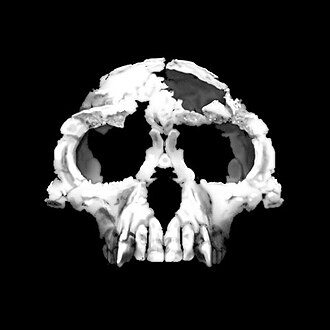
图:T. Michael Keesey · CC BY 2.0 · Wikimedia Commons
生命之树 › 真核生物 › 动物界 › 真后生动物亚界 › 两侧对称动物 › 后口动物总门 › 脊索动物门 › 脊椎动物亚门 › 有颌下门 › 肉鳍鱼总纲 › 四足形类 › 希望螈目 › 四足总纲 › 哺乳动物 › 兽型类 › 全兽类 › 兽亚纲 › 有胎盘类 › 北方真兽高目 › 灵长总目 › 灵长目 › 简鼻亚目 › 类人猿下目 › 狭鼻小目 › 人猿总科 › 人科 › 人亚科 › 人族 › 南猿亚族
地猿属属
Ardipithecus
地猿(Ardipithecus)是人科中非常早期的一属,生存在440万年前的上新世早期。由于它与非洲的类人猿有很多相似的地方,故它被认为是属于黑猩猩分支而非人类分支。但因其牙齿像南方古猿的牙齿,故大部分认为它是原始人。
摘自维基百科「地猿」,CC BY-SA 4.0
- 学名
- Ardipithecus
- 分类等级
- 属
- 上级类群
- 南猿亚族
- 大类
- 哺乳动物
- 命名
- 蒂姆·D·怀特、Gen Suwa、Berhane Asfaw,1995 年
- 数据库
- GBIF
下级类群(2)
百科正文
物种
地猿现有两个物种已被描述,即始祖地猿(A. ramidus)及卡达巴地猿(A. kadabba)。两个物种的遗骸都是在埃塞俄比亚中部阿瓦什发现。
始祖地猿
始祖地猿,又译拉米达地猿或拉密达地猿,又称地猿始祖种或地猿祖先种,是于1994年命名的。它的首个发现的化石估计属于440万年前。后期由约翰尼斯·海利-瑟拉解(Yohannes Haile-Selassie)及沃德盖布瑞尔(Giday WoldeGabriel)所发现的化石,如果是属于始祖地猿的话,则可推前至580万年前。
于1992年至1993年期间,由蒂莫西·怀特(Dr. Timothy White)所带领的研究队发现了首个始祖地猿的化石,即17个骨骼碎片,包括头颅骨、颚骨、牙齿及肢骨等,都是从埃塞俄比亚中部阿瓦什河谷的阿法尔洼地发现。更多的碎片于1994年发现,是完整骨骼的45%。枕骨大孔及脚骨的特征显示它是双足行走的。
卡达巴地猿
卡达巴地猿估计属于580-520万年前。它的犬齿有原始的特征,与现今人族有所不同。卡达巴地猿相信是人类分支从现今黑猩猩分支分裂后的最早动物。它原先被描述为始祖地猿的亚种,但基于在埃塞俄比亚发现的牙齿而被提升为独立的物种。
生活方式
基于地猿的骨头大小,估计它们的体型接近现今的黑猩猩。
从始祖地猿的趾骨结构,可见它是可以站立行走。这却引起了人科双足行走起源的问题。因为一般相信双足行走在大草原是最为节能的,但地猿却是生活在森林中而非大草原。
以上内容摘自维基百科「地猿」,按 CC BY-SA 4.0 使用,去掉了参考文献、外部链接等尾部小节,公式改写成了纯文本。全文、配图和出处见原文。
英文维基百科补充中文条目比较短,下面是英文条目「Ardipithecus」的原文
Ardipithecus is a genus of extinct hominine that lived during the Late Miocene and Early Pliocene epochs in the Afar Depression, Ethiopia. Originally described as one of the earliest ancestors of humans after they diverged from the last common ancestor shared with chimpanzees, the relation of this genus to human ancestors and whether it is a hominin is now a matter of debate. Two fossil species are described in the literature: A. ramidus, which lived about 4.4 million years ago during the early Pliocene, and A. kadabba, dated to approximately 5.6 million years ago (late Miocene). Initial behavioral analysis indicated that Ardipithecus could be very similar to chimpanzees; however, more recent analysis based on canine size and lack of canine sexual dimorphism indicates that Ardipithecus was characterised by reduced aggression, and that they more closely resemble bonobos.
Some analyses describe Australopithecus as being sister to Ardipithecus ramidus specifically. This means that Australopithecus is distinctly more closely related to Ardipithecus ramidus than Ardipithecus kadabba. Cladistically, then, Australopithecus (and eventually Homo sapiens) indeed emerged within the Ardipithecus lineage, and this lineage is not literally extinct.
Ardipithecus ramidus
A. ramidus was named in September 1994. The first fossil found was dated to 4.4 million years ago on the basis of its stratigraphic position between two volcanic strata: the basal Gaala Tuff Complex (G.A.T.C.) and the Daam Aatu Basaltic Tuff (D.A.B.T.). The name Ardipithecus ramidus stems mostly from the Afar language, in which Ardi means "ground/floor" and ramid means "root". The pithecus portion of the name is from the Greek word for "ape".
Like most hominids, but unlike all previously recognized hominins, it had a grasping hallux or big toe adapted for locomotion in the trees. It is not confirmed how many other features of its skeleton reflect adaptation to bipedalism on the ground as well. Like later hominins, Ardipithecus had reduced canine teeth and reduced canine sexual dimorphism.
Ardipithecus kadabba
Ardipithecus kadabba is "known only from teeth and bits and pieces of skeletal bones", and is dated to approximately 5.6 million years ago. It has been described as a "probable chronospecies" (i.e. ancestor) of A. ramidus. Although originally considered a subspecies of A. ramidus, in 2004 anthropologists Yohannes Haile-Selassie, Gen Suwa, and Tim D. White published an article elevating A. kadabba to species level on the basis of newly discovered teeth from Ethiopia. These teeth show "primitive morphology and wear pattern" which demonstrate that A. kadabba is a distinct species from A. ramidus.
The specific name comes from the Afar word for "basal family ancestor".
Classification
Due to several shared characteristics with chimpanzees, its closeness to ape divergence period, and due to its fossil incompleteness, the exact position of Ardipithecus in the fossil record is a subject of controversy. Primatologist Esteban Sarmiento had systematically compared and concluded that there is not sufficient anatomical evidence to support an exclusively human lineage. Sarmiento noted that Ardipithecus does not share any characteristics exclusive to humans, and some of its characteristics (those in the wrist and basicranium) suggest it diverged from humans prior to the human–gorilla last common ancestor.
Palaeobiology
Locomotion
The Ardipithecus length measures are good indicators of function and together with dental isotope data and the fauna and flora from the fossil site indicate Ardipithecus was mainly a terrestrial quadruped collecting a large portion of its food on the ground. Its arboreal behaviors would have been limited and suspension from branches solely from the upper limbs rare. According to Scott Simpson, the Gona Project's physical anthropologist, the fossil evidence from the Middle Awash indicates that both A. kadabba and A. ramidus lived in "a mosaic of woodland and grasslands with lakes, swamps and springs nearby," but further research is needed to determine which habitat Ardipithecus at Gona preferred.
以上节选摘自英文维基百科「Ardipithecus」,按 CC BY-SA 4.0 使用,去掉了参考文献、外部链接等尾部小节,公式改写成了纯文本。篇幅所限,较长的小节只摘了开头一部分,有的小节没有收;全文、配图和出处见原文。