格物

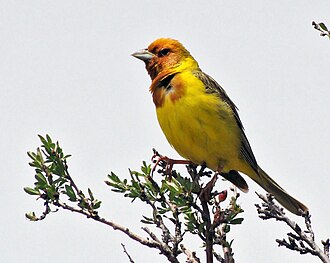
图:Steve Riall · CC BY 2.0 · Wikimedia Commons
生命之树 › 真核生物 › 动物界 › 真后生动物亚界 › 两侧对称动物 › 后口动物总门 › 脊索动物门 › 脊椎动物亚门 › 有颌下门 › 肉鳍鱼总纲 › 四足形类 › 希望螈目 › 四足总纲 › 爬行动物 › 坚尾龙类 › 鸟纲 › 今鸟亚纲 › 今颚下纲 › 新鸟总目 › 雀形目 › 鹀科 › 鹀属
黍鹀种
Emberiza calandra
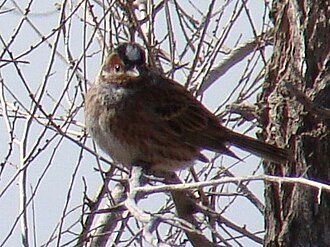
黍鹀 为雀科鹀属的鸟类。分布于欧洲、北非、西非、印度以及中国大陆的新疆等地,常见于草地、高山草原地或有稀疏灌木的旷地、以及麦田、谷地和河岸附近的耕地、喜栖于高的树枝或电线上以及或落于墙或篱笆上。该物种的模式产地在瑞典。
摘自维基百科「黍鹀」,CC BY-SA 4.0
- 学名
- Emberiza calandra
- 分类等级
- 种
- 英文名
- Corn Bunting
- 上级类群
- 鹀属
- 大类
- 鸟类
- 命名
- 卡尔·林奈,1758 年
- 保护状况(IUCN)
- 无危物种
- 异名
- Miliaria calandra
- 数据库
- NCBI 分类 · GBIF · IUCN 红色名录
百科正文
亚种
黍鹀指名亚种(学名:Emberiza calandra calandra)。分布于欧洲、北非、西非、印度以及中国大陆的新疆等地。该物种的模式产地在瑞典。
以上内容摘自维基百科「黍鹀」,按 CC BY-SA 4.0 使用,去掉了参考文献、外部链接等尾部小节,公式改写成了纯文本。全文、配图和出处见原文。
英文维基百科补充中文条目比较短,下面是英文条目「Corn bunting」的原文
The corn bunting (Emberiza calandra) is a passerine bird in the bunting family Emberizidae, a group now separated by most modern authors from the finches, Fringillidae. This is a large bunting with heavily streaked buff-brown plumage. The sexes are similar but the male is slightly larger than the female. Its range extends from Western Europe and North Africa across to northwestern China.
Taxonomy
The corn bunting was formally described by the Swedish naturalist Carl Linnaeus in 1758 in the tenth edition of his Systema Naturae and retains its original binomial name of Emberiza calandra. The type locality is Sweden. The genus name Emberiza is from Old German Embritz, a bunting. The specific calandra is from Ancient Greek kalandros, the calandra lark. The corn bunting has sometimes been placed in its own monotypic genus Miliaria.
Two subspecies are recognised:
E. c. calandra Linnaeus, 1758 – northwest Africa, Canary Islands and Europe to Turkey, the Caucasus and north Iran
E. c. buturlini Johansen, HE, 1907 – Middle East to northwest China
Description
This is an unusual bunting because the plumages of the sexes are similar in appearance, though the male is approximately 20% larger than the female. This large bulky bunting is 16–19 cm long, with a conspicuously dark eye and yellowish mandibles. Males lack any showy colours, especially on the head, which is otherwise typical of genus Emberiza. Both sexes look something like larks, being streaked grey-brown above with whitish underparts. The underparts are streaked over the flanks and breast, and the streaking forms gorget around the throat. The lesser wing coverts are distinctively dark and white-tipped. The tail is plain brown.
The song of the male is a repetitive metallic sound, usually likened to jangling keys, which is given from a low bush, fence post or telephone wires.
Distribution and habitat
It breeds across southern and central Europe, north Africa and Asia across to Kazakhstan. It is mainly resident, but some birds from colder regions of central Europe and Asia migrate southwards in winter.
The corn bunting is a bird of open country with trees, such as farmland and weedy wasteland. It has declined greatly in north-west Europe due to intensive agricultural practices depriving it of its food supply of weed seeds and insects, the latter especially vital when feeding the young. UK conservation status is red. It has recently become extinct in Wales and Ireland, where it was previously common.
Behaviour and ecology
Food and feeding
Its natural food consists mainly of seeds but also includes insects such as crickets, especially when feeding young.
Breeding
Males defend territories in the breeding season and can be polygynous, with up to three females per breeding male. The population sex ratio is generally 1:1, which means some males remain unmated during a season. Males play only a small role in parental care; they are not involved in nest building or incubation, and only feed the chicks when they are over half grown.
The nest is made of grass, lined with hair or fine grass, and is usually built on the ground. Average clutch size is four, but commonly varies from three to five, occasionally six.
Status and conservation
In England, the government's environmental organisation Natural England offers grants towards implementing measures to conserve this species, under the environmental stewardship scheme.
以上内容摘自英文维基百科「Corn bunting」,按 CC BY-SA 4.0 使用,去掉了参考文献、外部链接等尾部小节,公式改写成了纯文本。全文、配图和出处见原文。