格物
- 类型
- 定理、审敛法
- 命名来源
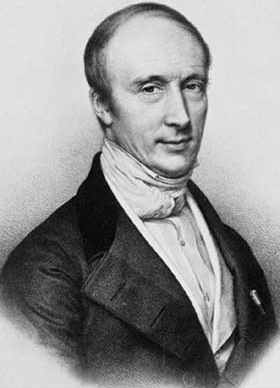
- 奥古斯丁·路易·柯西
- 研究学科
- 微积分
- 学科
- 物理学
相关科学家
百科正文
一般而言,一个单调递减、非负的实数序列 f(n) 所对应的级数 ∑ ₙ₌₁^(∞)f(n) 收敛当且仅当其“凝结”级数(英语:Condensed Series) ∑ ₙ₌₀^(∞)2ⁿf(2ⁿ) 收敛。 且此极限(如果存在)满足以下不等式: 0 ≤ ∑ ₙ₌₁^(∞)f(n) ≤ ∑ ₙ₌₀^(∞)2ⁿf(2ⁿ) ≤ 2∑ ₙ₌₁^(∞)f(n) ≤ +∞
换言之,“凝结”级数的极限在原级数极限和它的二倍之间。
推导
要证明该方法的正确性,我们需要证明上面的不等式。 (公式略)
∑ (公式略)
第一个不等式可以通过替换原级数里的一些项得到。注意这里需要用到原级数的性质(单调递减)。 (公式略)
相似地,第二个不等式也需要我们重新组合和替换。 (公式略)
以上内容摘自维基百科「柯西稠密判定法」,按 CC BY-SA 4.0 使用,去掉了参考文献、外部链接等尾部小节,公式改写成了纯文本。全文、配图和出处见原文。
英文维基百科补充中文条目比较短,下面是英文条目「Cauchy condensation test」的原文
In mathematics, the Cauchy condensation test, named after Augustin-Louis Cauchy, is a standard convergence test for infinite series. For a non-increasing sequence f(n) of non-negative real numbers, the series ∑ ₙ₌₁^(∞)f(n) converges if and only if the "condensed" series ∑ ₙ₌₀^(∞)2ⁿf(2ⁿ) converges. Moreover, if they converge, the sum of the condensed series is no more than twice as large as the sum of the original.
Estimate
The Cauchy condensation test follows from the stronger estimate, ∑ ₙ₌₁^(∞)f(n)≤ ∑ ₙ₌₀^(∞)2ⁿf(2ⁿ)≤ 2∑ ₙ₌₁^(∞)f(n),
which should be understood as an inequality of extended real numbers. The essential thrust of a proof follows, patterned after Oresme's proof of the divergence of the harmonic series.
To see the first inequality, the terms of the original series are rebracketed into runs whose lengths are powers of two, and then each run is bounded above by replacing each term by the largest term in that run. That term is always the first one, since by assumption the terms are non-increasing. (公式略)
To see the second inequality, these two series are again rebracketed into runs of power of two length, but "offset" as shown below, so that the run of 2∑ ₙ₌₁^(∞)f(n) which begins with f(2ⁿ) lines up with the end of the run of ∑ ₙ₌₀^(∞)2ⁿf(2ⁿ) which ends with f(2ⁿ), so that the former stays always "ahead" of the latter. (公式略)
Analogy with Integral Comparison
The condensation transformation f(n)→ 2ⁿf(2ⁿ) recalls the integral variable substitution x→ e^(x) yielding f(x) d x→ e^(x)f(e^(x)) d x.
The integral test for convergence gives us, in the case of monotone f, that ∑ ₙ₌₁^(∞)f(n) converges if and only if ∫ ₁^(∞)f(x) d x converges. The substitution x=2^(u) yields the integral log 2 ∫ ₀^(∞) 2^(u)f(2^(u)) d u. If we also have that the function (公式略) is monotone, the integral test applies and gives the convergence of the condensed series ∑ ₙ₌₀^(∞)2ⁿf(2ⁿ).
Examples
The test can be useful for series where n appears as in a denominator in f. For the most basic example of this sort, the harmonic series ∑ ₙ₌₁^(∞)1/n is transformed into the series ∑ 1, which clearly diverges.
For a more complex example, take f(n):=n^(-a)(log n)^(-b)(log log n)^(-c).
Here the series definitely converges for a > 1, and diverges for a < 1. When a = 1, the condensation transformation gives the Bertrand series ∑ n^(-b)(log n)^(-c).
The logarithms "shift to the left". So when a = 1, we have convergence for b > 1, divergence for b < 1. When b = 1 the value of c enters.
This result readily generalizes: the condensation test, applied repeatedly, can be used to show that for k=1,2,3,…, the generalized Bertrand series (公式略) converges for α >1 and diverges for 0<α ≤ 1. Here f^(∘ m) denotes the mth iterate of a function f, so that (公式略)
The lower limit of the sum, N, was chosen so that all terms of the series are positive. Notably, these series provide examples of infinite sums that converge or diverge arbitrarily slowly. For instance, in the case of k=2 and α =1, the partial sum exceeds 10 only after 10¹0¹⁰⁰ (a googolplex) terms; yet the series diverges nevertheless.
Schlömilch's generalization
A generalization of the condensation test was given by Oskar Schlömilch. Let u(n) be a strictly increasing sequence of positive integers such that the ratio of successive differences is bounded: there is a positive real number N, for which (公式略)
Then, provided that f(n) meets the same preconditions as in Cauchy's convergence test, the convergence of the series ∑ ₙ₌₁^(∞)f(n) is equivalent to the convergence of ∑ ₙ₌₀^(∞)Δ u(n) f(u(n)) = ∑ ₙ₌₀^(∞) (u(n+1)-u(n))f(u(n)).
Taking u(n)=2ⁿ so that Δ u(n)=u(n+1)-u(n)=2ⁿ, the Cauchy condensation test emerges as a special case.
以上内容摘自英文维基百科「Cauchy condensation test」,按 CC BY-SA 4.0 使用,去掉了参考文献、外部链接等尾部小节,公式改写成了纯文本。全文、配图和出处见原文。