格物

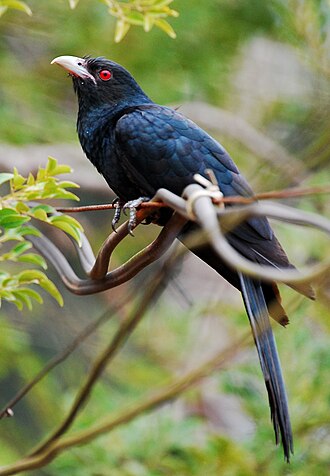
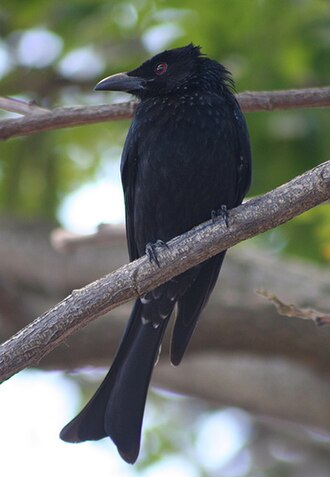
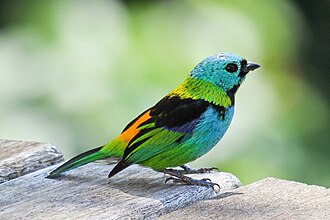
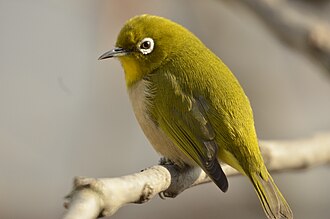
图:Bernard DUPONT from FRANCE · CC BY-SA 2.0 · Wikimedia Commons
生命之树 › 真核生物 › 动物界 › 真后生动物亚界 › 两侧对称动物 › 后口动物总门 › 脊索动物门 › 脊椎动物亚门 › 有颌下门 › 肉鳍鱼总纲 › 四足形类 › 希望螈目 › 四足总纲 › 爬行动物 › 坚尾龙类 › 鸟纲 › 今鸟亚纲 › 今颚下纲 › 新鸟总目 › 雀形目
织布鸟科科
Ploceidae
织雀科,或称织布鸟科,是鸟纲雀形目中的一个体型细小鸟类的科。在较近期的分类,织布鸟科是一个演化支,这令到部分旧有的分类单元现时被划分到其他的科,例如:梅花雀科 或雀科;但Amblyospizinae这个单系的亚科仍留在本科。
本科相信起源于中新世中期。所有本科物种皆为旧大陆的原生物种,当中绝大部分位于撒哈拉以南的非洲,尽管有少量栖息于亚洲的热带地区。小量物种成为了其原生区域以外的外来物种。
摘自维基百科「織布文鳥科」,CC BY-SA 4.0
- 学名
- Ploceidae
- 分类等级
- 科
- 上级类群
- 雀形目
- 大类
- 鸟类
- 命名
- 卡尔·雅各布·松德瓦尔,1836 年
- 数据库
- NCBI 分类 · GBIF
下级类群(8)
百科正文
分类
属
详细有关本科的所有属,请参看list of Ploceidae species。以下列出部分现时一般都被分类到本科的属:
Bubalornis – (2 species)
Dinemellia – White-headed buffalo weaver
雀织鸟属 Plocepasser – sparrow-weavers (4 species)
- Histurgops – Rufous-tailed weaver
- Pseudonigrita – (2 species)
- Philetairus – Sociable weaver
- Sporopipes – (2 species)
- Amblyospiza– 厚嘴织雀
- 织布鸟属 Ploceus:本属物种的多样性在本科最高,有64个物种;
- Malimbus – (10 species)
- Anaplectes – Red-headed weaver
- 奎利亚雀属 Quelea\ – (3 species)
- 艳织雀属 Foudia:有七个物种;
- Brachycope – Bob-tailed weaver
寡妇鸟属 Euplectes – bishops and widowbirds (17 species)
以下分类单元现时已不再属于本科:
雪雀属:6个页面,旧属文鸟科,今属雀科。
以上内容摘自维基百科「織布文鳥科」,按 CC BY-SA 4.0 使用,去掉了参考文献、外部链接等尾部小节,公式改写成了纯文本。全文、配图和出处见原文。
英文维基百科补充中文条目比较短,下面是英文条目「Ploceidae」的原文
Ploceidae is a family of small passerine birds, many of which are called weavers, weaverbirds, weaver finches, or bishops. These names come from the nests of intricately woven vegetation created by birds in this family. In most recent classifications, the Ploceidae are a clade that excludes some birds that have historically been placed in the family, such as some of the sparrows, but which includes the monotypic subfamily Amblyospizinae. The family is believed to have originated in the mid-Miocene. All birds of the Ploceidae are native to the Old World, most in Africa south of the Sahara, though a few live in tropical areas of Asia. A few species have been introduced outside their native range.
Taxonomy and systematics
The family Ploceidae was introduced (as Ploceïdes) by Swedish zoologist Carl Jakob Sundevall in 1836. Phylogenetic studies have shown that the family is sister to a clade containing the families Viduidae and Estrildidae Their common ancestor lived in the middle Miocene around 18 million years ago.
A 2017 molecular phylogenetic study by Thilina de Silva and collaborators, as well as an expanded study by the same group published in 2019 have indicated that the genus Ploceus as currently defined is polyphyletic. A cladogram based on these results is shown below.
Genera
The family includes 16 genera with a total of 122 species. For more detail, see list of Ploceidae species.
Description
The males of many species in this family are brightly coloured, usually in red or yellow and black. Some species show variation in colour only in the breeding season. These are seed-eating birds with rounded conical bills.
Distribution and habitat
The weaverbird colonies may be found close to bodies of water.
Behaviour and ecology
Weavers are named for their elaborately woven nests. The nests vary in size, shape, material used, and construction techniques from species to species. Materials used for building nests include fine leaf fibers, grass, and twigs. Many species weave very fine nests using thin strands of leaf fiber, though some, like the buffalo-weavers, form massive untidy stick nests in their colonies, which may have spherical woven nests within. The sociable weavers of Africa build apartment-house nests, in which 100 to 300 pairs have separate flask-shaped chambers entered by tubes at the bottom. The sparrow weavers live in family units that employ cooperative breeding.
Most species weave nests that have narrow entrances, facing downward.
Many weaver species are gregarious and breed colonially. The birds build their nests together for protection, often several to a branch. Usually, the male birds weave the nests and use them as a form of display to lure prospective females.
Relationship to humans
They sometimes cause crop damage, notably the red-billed quelea, reputed to be the world's most numerous bird.
以上内容摘自英文维基百科「Ploceidae」,按 CC BY-SA 4.0 使用,去掉了参考文献、外部链接等尾部小节,公式改写成了纯文本。全文、配图和出处见原文。