格物

图:Guérin Nicolas (messages) · CC BY-SA 3.0 · Wikimedia Commons
生命之树 › 真核生物 › 动物界 › 真后生动物亚界 › 两侧对称动物 › 后口动物总门 › 脊索动物门 › 脊椎动物亚门 › 有颌下门 › 肉鳍鱼总纲 › 四足形类 › 希望螈目 › 四足总纲 › 哺乳动物 › 兽型类 › 全兽类 › 兽亚纲 › 有胎盘类 › 北方真兽高目 › 灵长总目 › 灵长目 › 简鼻亚目 › 类人猿下目 › 狭鼻小目 › 人猿总科 › 人科 › 人亚科 › 人族 › 南猿亚族 › 南方古猿属
湖畔南方古猿种
Australopithecus anamensis
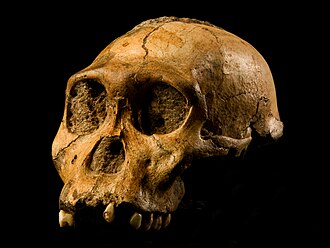
湖畔南方古猿,又名南方古猿湖畔种,是一种南方古猿。它的首个化石只有一个于1965年在肯雅图尔卡纳湖东部上新世地层发现的肱骨。这个标本被临时编入南方古猿属中,并是属于400万年前。于1987年,加拿大考古学家Allan Morton在这个位点附近发现一些化石碎片。6年后古人类学家米芙·利基等人再在这个地方发掘出更多的人科化石碎片,包括完整的下颌骨,这个下颌骨像黑猩猩,但牙齿却像人类。于1995年,米芙·利基等人将这些化石与阿法南方古猿比较,并命名为湖畔南方古猿。
摘自维基百科「湖畔南方古猿」,CC BY-SA 4.0
- 学名
- Australopithecus anamensis
- 分类等级
- 种
- 上级类群
- 南方古猿属
- 大类
- 哺乳动物
- 命名
- 米芙·李奇,1995 年
- 数据库
- GBIF
百科正文
虽然发掘队没有发现任何臀部、肢或脚,米芙·利基相信湖畔南方古猿经常攀树。早期的人亚科仍然保有攀树的习性,直至首个人属于250万年前出现。湖畔南方古猿有很多特征都像阿法南方古猿,故有可能是其直接祖先。湖畔南方古猿相信是生存于410-390万年前。最古老的标本是在介乎417-412万年前的火山灰中发现,与阿法南方古猿的化石纪录属于同一时期。
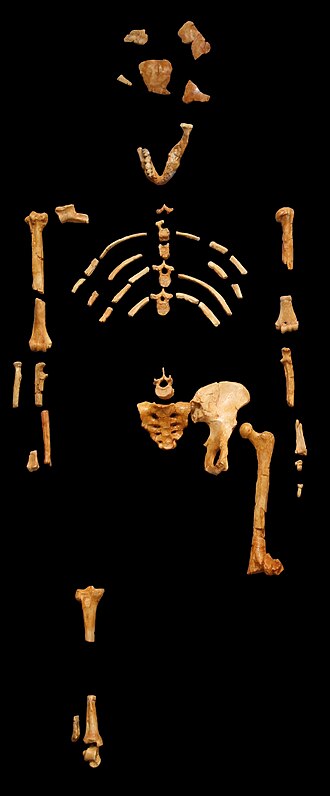
已发现的湖畔南方古猿化石有上下颚、头颅骨碎片、并胫骨的上下部分。另外,在卡纳波依发现的肱骨碎片亦是属于湖畔南方古猿的。
于2006年亦发表了新的湖畔南方古猿化石,它的分布地扩展至埃塞俄比亚的东北部。这些新发现的化石包括了已知最大的人科犬齿,及最古老的南方古猿大腿骨。发现的地方是中阿瓦什,亦是其他几个其他南方古猿的地方。距离这个位点只有6里的地方,正是发现始祖地猿的位点。地猿是更为原始的人科,较湖畔南方古猿要古老20万年,足以填补人科在南方古猿以前的演化历史。
以上内容摘自维基百科「湖畔南方古猿」,按 CC BY-SA 4.0 使用,去掉了参考文献、外部链接等尾部小节,公式改写成了纯文本。全文、配图和出处见原文。
英文维基百科补充中文条目比较短,下面是英文条目「Australopithecus anamensis」的原文
Australopithecus anamensis is a hominin species that lived roughly between 4.3 and 3.8 million years ago, and is the oldest known Australopithecus species.
Nearly 100 fossil specimens of A. anamensis are known from Kenya and Ethiopia, representing over 20 individuals. The first fossils of A. anamensis discovered are dated to around 3.8 and 4.2 million years ago and were found in Kanapoi and Allia Bay in northern Kenya.
A. afarensis is normally accepted to have emerged within this lineage. However, A. anamensis and A. afarensis appear to have lived side-by-side for at least some period of time, and whether the lineage that led to extant humans emerged in A. afarensis, or directly in A. anamensis is not fully settled.
Fossil evidence determines that Australopithecus anamensis is the earliest hominin species in the Turkana Basin, but likely co-existed with afarensis towards the end of its existence. A. anamensis and A. afarensis may be treated as a single grouping.
Preliminary analysis of the sole upper cranial fossil indicates A. anamensis had a smaller cranial capacity (estimated 365–370 cm3) than A. afarensis.
Discovery
The first fossilized specimen of the species, although not recognized as such at the time, was a single fragment of humerus (arm bone) found in Pliocene strata in the Kanapoi region of West Lake Turkana by a Harvard University research team in 1965. Bryan Patterson and William W. Howells's initial paper on the bone was published in Science in 1967; their initial analysis suggested an Australopithecus specimen and an age of 2.5 million years. Patterson and colleagues subsequently revised their estimation of the specimen's age to 4.0–4.5 mya based on faunal correlation data.
Environment
Australopithecus anamensis was found in Kenya, specifically at Allia Bay, East Turkana. Through analysis of stable isotope data, their environment is believed to have been more closed woodland canopies surrounding Lake Turkana than are present today. The greatest density of woodlands at Allia Bay was along the ancestral Omo River. More open savanna was thought to exist in the basin margins or uplands. Similarly at Allia Bay, the environment was suggested as much wetter. While not definitive, nut or seed-bearing trees could have been present at Allia Bay, but more research is needed.
Diet
Studies of the occlusal dental microwear on A. anamensis molar fossils show a pattern of long striations. This pattern is similar to the microwear on the molars of gorillas, suggesting that A. anamensis had a similar diet to that of the modern gorilla. The microwear patterns are consistent on all A. anamensis molar fossils regardless of location or time. This shows that their diet largely remained the same no matter what their environment. The signal derived from A. anamensis buccal microwear is consistent with feeding on hard and brittle foodstuffs.
Relation to other hominin species
Australopithecus anamensis is the intermediate species between Ardipithecus ramidus and Australopithecus afarensis, and has several shared traits with humans and other apes. Fossil studies of the wrist morphology of A. anamensis have suggested knuckle-walking, which is a derived trait shared with other African apes. The A. anamensis hand portrays robust phalanges and metacarpals, and long middle phalanges. These characteristics show that the A. anamensis likely engaged in arboreal living, but were largely bipedal, although not in an identical way to Homo.
Physical characteristics
Based on fossil evidence, A. anamensis expresses high degrees of sexual dimorphism. Although considered to be the more primitive of the australopiths, A. anamensis had parts of the knee, tibia, and elbow that were different from apes, which indicates bipedalism as the species' form of locomotion. Specifically, the tibia bone of A. anamensis has a more expansive upper end with bone.
In addition to the modified body parts that indicate bipedalism, A. anamensis fossils show evidence of tree climbing. Archeological finds indicate that A. anamensis had long forearms, as well as modified features of the wrist bone.
Life history
A. anamensis had a significantly faster life history than modern humans, with analysis of its dental eruption and crown calcification rates showing its rate of growth was substantially more rapid than that of modern human juveniles.
以上节选摘自英文维基百科「Australopithecus anamensis」,按 CC BY-SA 4.0 使用,去掉了参考文献、外部链接等尾部小节,公式改写成了纯文本。篇幅所限,较长的小节只摘了开头一部分,有的小节没有收;全文、配图和出处见原文。