格物

图:Ji-Elle · CC BY-SA 3.0 · Wikimedia Commons
生命之树 › 真核生物 › 动物界 › 真后生动物亚界 › 两侧对称动物 › 后口动物总门 › 脊索动物门 › 脊椎动物亚门 › 有颌下门 › 肉鳍鱼总纲 › 四足形类 › 希望螈目 › 四足总纲 › 哺乳动物 › 兽型类 › 全兽类 › 兽亚纲 › 有胎盘类 › 北方真兽高目 › 灵长总目 › 灵长目 › 简鼻亚目 › 类人猿下目 › 狭鼻小目 › 人猿总科 › 人科 › 人亚科 › 人族 › 南猿亚族 › 南方古猿属
惊奇南方古猿种
Australopithecus garhi
惊奇南方古猿,又名南方古猿惊奇种,是于1996年由贝哈内·阿斯福及蒂姆·D·怀特发现的南方古猿。最初相信它是人类的祖先,且是南方古猿及人类之间失落的连系。但是现时相信它是人类祖先的竞争对手,而非人类祖先。惊奇南方古猿的化石是介乎200-300万年前,这段时期只有很少的化石纪录。它的化石是在埃塞俄比亚阿法尔洼地的中阿瓦什发现。
摘自维基百科「驚奇南方古猿」,CC BY-SA 4.0
- 学名
- Australopithecus garhi
- 分类等级
- 种
- 上级类群
- 南方古猿属
- 大类
- 哺乳动物
- 数据库
- GBIF
百科正文
形态
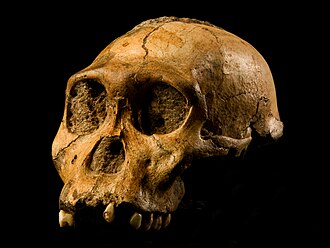
惊奇南方古猿的化石,如BOU-VP-12/130,与阿法南方古猿及非洲南方古猿有所分别。惊奇南方古猿的颅腔约有450立方厘米,与其他的南方古猿类相同。它的小臼齿及臼齿有些地方像鲍氏傍人。有指若惊奇南方古猿是人属(如巧人)的祖先,它们的下颌骨形态在约20-30万的时间内出现很大的变化。
最早的石器用具
在发现惊奇南方古猿化石的位点中,亦发现了一些原始形状的石器工具,彷似奥杜威文化期工艺,估计是属于250-260万年前。这些较巧人工具还要古老的器具,估计是属于现今人科直系祖先的。一直以来,人类学家认为只有人属的成员才有能力生产工具,但是在奥杜威及阿秀尔时期却有一些原始的工具。另外在埃塞俄比亚亦有发现估计属于250万年前约3000件的石器工具。
以上内容摘自维基百科「驚奇南方古猿」,按 CC BY-SA 4.0 使用,去掉了参考文献、外部链接等尾部小节,公式改写成了纯文本。全文、配图和出处见原文。
英文维基百科补充中文条目比较短,下面是英文条目「Australopithecus garhi」的原文
Australopithecus garhi is a species of australopithecine from the Bouri Formation in the Afar Region of Ethiopia 2.6–2.5 million years ago (mya) during the Early Pleistocene. The first remains were described in 1999 based on several skeletal elements uncovered in the three years preceding. A. garhi was originally considered to have been a direct ancestor to Homo and the human line, but is now thought to have been an offshoot. Like other australopithecines, A. garhi had a brain volume of 450 cc (27 cu in); a jaw which jutted out (prognathism); relatively large molars and premolars; adaptations for both walking on two legs (bipedalism) and grasping while climbing (arboreality); and it is possible that, though unclear if, males were larger than females (exhibited sexual dimorphism). One individual, presumed female based on size, may have been 140 cm (4 ft 7 in) tall.
A. garhi is the first pre-Homo hominin postulated to have manufactured tools—using them in butchering—and may be counted among a growing body of evidence for pre-Homo stone tool industries (the ability to manufacture tools was previously believed to have separated Homo from predecessors). A. garhi possibly produced the Oldowan industry which was previously considered to have been invented by the later H. habilis, though this may have instead been produced by contemporary Homo.
Anatomy
Like other australopithecines, A. garhi had a brain volume of about 450 cc (27 cu in), a sagittal crest running along the midline of the skull, and a prognathic jaw (the jaw jutted out). Relatively, the postcanine teeth, the molars and premolars, are massive (post-canine megadontia), similar to or greater than those of other australopithecines and of the large-toothed Paranthropus robustus.
Like the earlier A. afarensis from the same region, A. garhi had a humanlike humerus to femur ratio, and an apelike brachial index (lower to upper arm ratio) as well as curved phalanges of the hand. This is generally interpreted as adaptations for both walking on two legs (habitual bipedalism) as well as for grasping while climbing in trees (arboreality).
The BOU-VP-35/1 humerus specimen is notably larger than the humerus of the BOU-VP-12/1 specimen, which could potentially indicate size-specific sexual dimorphism with males larger than females to a similar degree to what is postulated in A.
Taxonomy
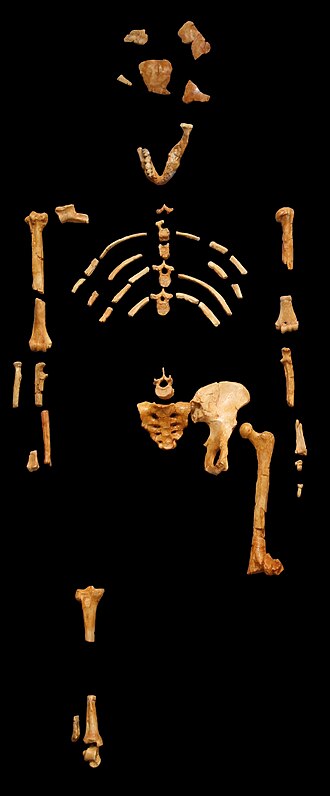
The Ethiopian Australopithecus garhi was first described in 1999 by palaeoanthropologists Berhane Asfaw, Tim D. White, Owen Lovejoy, Bruce Latimer, Scott Simpson, and Gen Suwa based on fossils discovered in the Hatayae Beds of the Bouri Formation in Middle Awash, Afar Region, Ethiopia. The first hominin remains were discovered here in 1990—a partial parietal bone (GAM-VP-1/2), left jawbone (GAM-VP-1/1), and left humerus (MAT-VP-1/1)—which are unassignable to a specific genus. The first identifiable Australopithecus fossils—an adult ulna (BOU-VP-11/1)—were found on 17 November 1996 by T. Assebework. A partial skeleton (BOU-VP-12/1) was discovered 13 days later by White, comprising a mostly complete left femur, right humerus, radius, and ulna, and a partial fibula, foot, and jawbone. The holotype specimen, a partial skull (BOU-VP-12/130), was discovered on 20 November 1997 by Ethiopian palaeoanthropologist Yohannes Haile-Selassie. More skull fragments (BOU-VP-12/87) were recovered 50 m (160 ft) south of BOU-VP-12/1.
Palaeoecology
The large teeth of Australopithecus species have historically been interpreted as having been adaptations for a diet of hard foods, but the durable teeth may instead have only served an important function during leaner times for harder fallback foods. That is, dental anatomy may not accurately portray normal Australopithecus diet, rather abnormal diet during times of famine.
Though it was not found with any tools, mammalian bones associated with the A. garhi remains exhibit cut and percussion marks made from stone tools: the left mandible of an alcelaphine bovid with three successive, unambiguous cut marks presumably made while removing the tongue; a bovid tibia with cut marks, chop marks, and impact scars from a hammerstone, possibly inflicted to harvest the bone marrow; and a Hipparion (a horse) femur with cut marks consistent with dismemberment and filleting.
以上节选摘自英文维基百科「Australopithecus garhi」,按 CC BY-SA 4.0 使用,去掉了参考文献、外部链接等尾部小节,公式改写成了纯文本。篇幅所限,较长的小节只摘了开头一部分,有的小节没有收;全文、配图和出处见原文。