格物
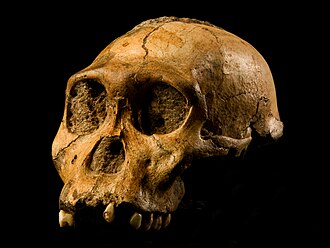
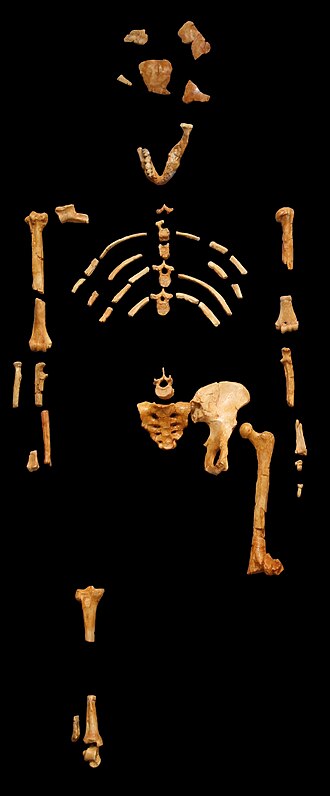
图:Photo by Brett Eloff. Courtesy Profberger and Wits Universit… · CC BY-SA 4.0 · Wikimedia Commons
生命之树 › 真核生物 › 动物界 › 真后生动物亚界 › 两侧对称动物 › 后口动物总门 › 脊索动物门 › 脊椎动物亚门 › 有颌下门 › 肉鳍鱼总纲 › 四足形类 › 希望螈目 › 四足总纲 › 哺乳动物 › 兽型类 › 全兽类 › 兽亚纲 › 有胎盘类 › 北方真兽高目 › 灵长总目 › 灵长目 › 简鼻亚目 › 类人猿下目 › 狭鼻小目 › 人猿总科 › 人科 › 人亚科 › 人族 › 南猿亚族 › 南方古猿属
源泉南方古猿种
Australopithecus sediba
南方古猿源泉种 是一个建议中的南方古猿种,根据其化石遗骇,可追溯至大约178万到195万年前的更新世。南方古猿源泉种的特色是:他同时具有原始人及现代人的特征,被认为更接近今日的人种。
摘自维基百科「南方古猿源泉种」,CC BY-SA 4.0
- 学名
- Australopithecus sediba
- 分类等级
- 种
- 上级类群
- 南方古猿属
- 大类
- 哺乳动物
- 命名
- 李伯杰,2010 年
- 数据库
- GBIF
百科正文
南方古猿源泉种这个新的人种是基于两个在2008年于南非马拉帕化石地点发现的人类残骸化石。这两个残骇分别属于一位男性青少年(即模式标本),另一个是成年女性,二人关系未明。截至报导发表日期(2010年初),二人的残骸合共找到了约130块残片。残骸是由南非古人类学家李伯杰和他的同事于2008年发现,并分别于两份刊载于《科学》杂志的文章里纪述这次发现。在确定发现了新物种后,他们把这两具残骸的种属命名为Australopithecus sediba。“sediba”是索托语“天然泉水”或“水井”的意思。
以上内容摘自维基百科「南方古猿源泉种」,按 CC BY-SA 4.0 使用,去掉了参考文献、外部链接等尾部小节,公式改写成了纯文本。全文、配图和出处见原文。
英文维基百科补充中文条目比较短,下面是英文条目「Australopithecus sediba」的原文
Australopithecus sediba is an extinct species of australopithecine recovered from Malapa Cave, Cradle of Humankind, South Africa. It is known from a partial juvenile skeleton, the holotype MH1, and a partial adult female skeleton, the paratype MH2. They date to about 1.98 million years ago in the Early Pleistocene, and coexisted with Paranthropus robustus and Homo ergaster / Homo erectus. Malapa Cave may have been a natural death trap, the base of a long vertical shaft which creatures could accidentally fall into. A. sediba was initially described as being a potential human ancestor, and perhaps the progenitor of Homo, but this is contested and it could also represent a late-surviving population or sister species of A. africanus which had earlier inhabited the area.
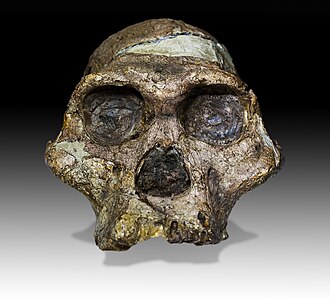
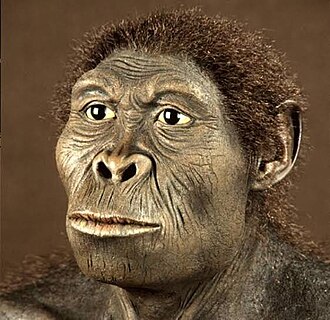
MH1 has a brain volume of about 350–440 cc, similar to other australopithecines. The face of MH1 is strikingly similar to Homo instead of other australopithecines, with a less pronounced brow ridge, cheek bones, and prognathism (the amount the face juts out), and there is evidence of a slight chin. However, such characteristics could be due to juvenility and lost with maturity. The teeth are quite small for an australopithecine. MH1 is estimated at 130 cm (4 ft 3 in) tall, which would equate to an adult height of 150–156 cm (4 ft 11 in – 5 ft 1 in). MH1 and MH2 were estimated to have been about the same weight at 30–36 kg (66–79 lb). Like other australopithecines, A. sediba is thought to have had a narrow and apelike upper chest, but a broad and humanlike lower chest. Like other australopithecines, the arm anatomy seems to suggest a degree of climbing and arboreal behaviour. The pelvis indicates A. sediba was capable of a humanlike stride, but the foot points to a peculiar gait not demonstrated in any other hominin involving hyperpronation of the ankle, and resultantly rotating the leg inwards while pushing off. This suite of adaptations may represent a compromise between habitual bipedalism and arboreality.
A. sediba seems to have eaten only C3 forest plants such as some grasses and sedges, fruits, leaves, and bark. This strongly contrasts from other early hominins which ate a mix of C3 and abundant C4 savanna plants, but is similar to modern savanna chimpanzees. No other hominin bears evidence of eating bark as part of regular diet. Such a generalist diet may have allowed it to occupy a smaller home range than savanna chimps. The Malapa area may have been cooler and more humid than today, featuring closed forests surrounded by more open grasslands.
Research history
Specimens
The first fossil find was a right clavicle, MH1 (UW88-1), in Malapa Cave, Cradle of Humankind, South Africa, discovered by 9-year-old Matthew Berger on 15 August 2008 while exploring the digsite headed by his father, South African palaeoanthropologist Lee Rogers Berger. Further excavation yielded a partial skeleton for MH1, additionally including a partial skull and jawbone fragments, as well as aspects of the arms, fingers, shoulders, ribcage, spine, pelvis, legs, and feet.
Anatomy
Skull
Only the cranial vault of MH1 was preserved, which has a volume of 363 cc. The very back of the brain is estimated to have been 7–10 cc. To estimate the cerebellum, the australopithecines KNM-ER 23000 (Paranthropus boisei) and Sts 19 (A. africanus) with volumes of 40–50 cc, as well as KNM-ER 1813 (H. habilis), KNM-ER 1805 (H. habilis), and KNM-ER 1470 (H. rudolfensis) with volumes of 55–75 cc were used to estimate the volume of the MH1 cerebellum as about 50 cc.
Palaeobiology
Diet
Analysis of phytoliths (microscopic plant remains) from the dental plaque of both specimens and carbon isotope analysis shows a diet of almost exclusively C3 forest plants despite a presumably wide availability of C4 plants in their mixed savanna environment. Such a feeding pattern is also observed in modern savanna chimps and is hypothesised for the Early Pliocene Ardipithecus ramidus, but is quite different from any other early hominin.
以上节选摘自英文维基百科「Australopithecus sediba」,按 CC BY-SA 4.0 使用,去掉了参考文献、外部链接等尾部小节,公式改写成了纯文本。篇幅所限,较长的小节只摘了开头一部分,有的小节没有收;全文、配图和出处见原文。